
My paternal grandparents and their siblings and cousins all emigrated from Sicily circa 1890-1910. They settled in New York City, Massachusetts, and New Jersey. Their descendents continue to live in those locations and in California.
My father's mother (my grandmother) was Angelina MARINO MANFREDI, born July 7, 1893 in Castellamare del Golfo, Sicily.
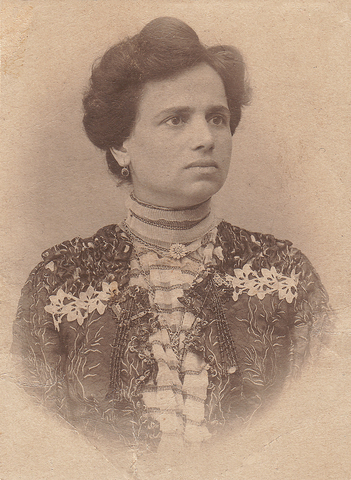
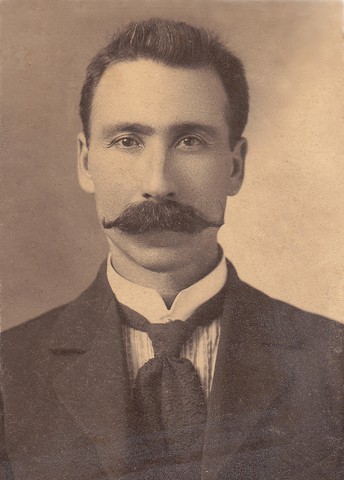
Angelina MARINO'S mother (my great-grandmother) was Maria GIANGRASSO MARINO of Sicily. I have no paper records of where the GIANGRASSO family originated, but I was told they were from Calatafimi, Trapani, Sicily. Maria was born around 1869, according to ship's passenger records, although she also gave her birth year as 1872-73, and 1877-78) according to Federal Census records. According the LDS (unsourced) records she died in New York city around 1937.
Angelina MARINO'S father (my great-grandfather) was Giovanni (John) MARINO. He was born around 1861, according to ship's passenger and Federal Census records, although one census record lists his birth year as 1866-67. According the LDS (unsourced) records he died in New York city around 1934. His birthplace is unknown to me, other than that it was in Sicily. I have found family tree records that indicate he may have been born on November 9, 1861 in Sciacca, Agrigento, Sicilia, Italy to parents Diego MARINO (1822 - ?) and Anna MANISCALCO (1824 - ?).
According to one online family tree, this Giovanni MARINO had one sibling, Gaetano MARINO (February 21, 1849 - ?), who was born and died in Sciacca, Agrigento, Sicilia, Italy. Gaetano MARINO married Elisabetta GIARRATANO MARINO (born August 25, 1859 in Sciacca, Agrigento, Sicilia, Italy) She died in 1936 in Brooklyn, New York, after immigrating to America. Gaetano and Elisabetta's children were Salvatore MARINO (1889, Sciacca, Agrigento, Sicilia, Italy - ?) and Diego / Dick / Richard / Luigi / Lewis / Louis MARINO (born November 27, 1887, Sciacca, Agrigento, Sicilia, Italy.
In 1905, Diego MARINO (who was named after his grandfather and was also Giovanni's nephew) was living at 91 Elizabeth Street in New York City. On September 16, 1905, in Manhattan, New York, USA, Diego married Calogera ("Nina") Dimino. He was listed in several early 20th century census records and on his World War I draft registration card as a "fish peddler" and "huckster." He was of "medium" height and "medium" build, with brown eyes and brown hair. Presumably his mother, Elisabetta, moved to New York to be near Diego after her husband died in Sciacca. Diego died in 1942 in Brooklyn, New York. Why Diego had so many alternative names -- one hesitates to call them "aliases" -- is a matter of speculation.
Obviously Giovanni Marino would be a common name in Sicily, but i do think it is possible that these MARINO-MANISCALCO family tree records are those of my great-grandfather, because according to my father, my great-grandfather John MARINO was originally from Agrigento Province, Sicily, where his family "owned almond orchards" and were "intellectuals" "of ancient Greek descent." Sciacca was known in ancient times as Thermae (Hot Springs) and, according to Wikipedia, it "was founded in the 5th century B.C. by the Greeks, as its name imports, as a thermal spa for Selinunte, whose citizens came there to bathe in the sulphurous springs of Mount San Calogero, which rises up behind the town."
(Side-note: According to my DNA tests, My father was half Jewish by genetics; that is, one of his parents was fully Jewish or both of his parents were partially Jewish by genetics. Many Jews in Sicily were required to leave the island or convert to Catholicism during the Spanish rule of Sicily, according to the edict of 1492. Prior to this edict, the town of Sciacca was home to many Jews, as recorded in official documents of the 15th century. Some of these Jews had the surname GRECO ("Greek"). In addition to this, the surname DE MARINO / MARINO ("of the sea / sailor") was one of the many surnames known to have been taken by Jews who converted rather than emigrating in 1492. Except for MANISCALCO, a surname from Sciacca that was recorded in the dealings of Jews in the 15th century, the other surnames in this family history (Manfredi, Giangrasso, Giarratano, Percoco, et al) are not notably associated with Jews in Sicily. I mention this only with respect to my father's claim to me that his mother's father was "of ancient Greek descent." The Marinos may have been Greek Jews or Crypto-Jews, or at one time had the surname Greco.)
My father told me that his grandfather John MARINO had been "a mounted policeman and a detective" while a young man in Sicily. He wanted to "retire and open a produce shop "like his three brothers," but for some "political" reason, he was "denied a license," so "he emigrated to Massachusetts" in the early 1900s with his young wife Maria GIANGRASSO MARINO and their daughters Angelina MARINO and Francesca MARINO. The destination of Massachusetts accords with the history of Sciacca, for according to Wikipedia, "Starting near the turn of the 20th century, a number of residents of the Sciacca area emigrated to the North End of Boston, Massachusetts."
On the surface, my father's account makes little sense to me, because John MARINO would have been all of 40 years old when he tried to "retire" from being "a mounted policeman and a detective." And why would an "intellectual" man who had a career as a "mounted policeman and a detective" wish to open a "produce shop"?
According to my father, his mother Angelina first arrived in the United States as a little child with her sister Francesca and her parents, Maria and John MARINO. (This is confirmed by the 'ship's passenger list.) He told me that the family "lived in Massachusetts for a while" (i found records from Rhode Island) but that his mother "was sent back to Sicily to study in a convent" (i found no records of this at all) and that when she returned to America John and Maria MARINO had relocated to New York City (which the 1920 census confirms).
Through it all, according to my father (and i can testify to this as well), Angelina had "an artistic sensibility" and valued fine art, clothing design, fabric patterns, and architectural decor very highly. For a time she earned her living by making silk and paper flowers. She was always very skilled with her hands, was both a fine seamstress and embroiderer, and was also an accomplished cook. She, her sister, and their father had worked in a woolen mill in 1910. Her sister Frances was employed as a millinery trimmer in 1920, and Angelina had done that work too, before having children. Her father John MARINO was a "maker of toys" -- that is to say, he hand-crafted traditional Italian-style toys and sold them in the streets of New York; he was not employed in a toy factory.
A ship's passenger record gives a snapshot picture of the family on October 11, 1901, when they sailed from Naples to New York aboard a British steam ship called the Tartar Prince:
Giovanni Marino, 40 (born in 1861), married, labourer, able to read and write, Italian, last residence Catania. passage paid by self, carrying $100.00 in funds, never in the United States previously, intending to live with his sister. [But who is this sister???]Maria Marino, 32 (born in 1869), wife, married, labourer, unable to read and write, Italian, last residence Catania. passage paid by husbnd, no funds, never in the United States previously, intending to live with her sister-in-law.
Areangela [sic] Marino, 8 (born in 1893), daughter, single, unemployed, unable to read and write, Italian, last residence Catania. passage paid by father, no funds, never in the United States previously, intending to live with her aunt.
Francesca Marino, 5 (born in 1896), daughter, single, unemployed, unable to read and write, Italian, last residence Catania. passage paid by father, no funds, never in the United States previously, intending to live with her aunt.
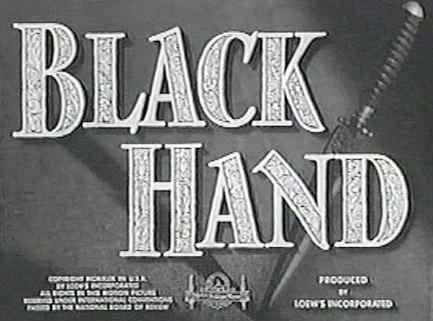
Interestingly, when i was a child, Angelina told me frightening stories of living in the tenements of New York City's Lower East Side as a young girl amidst the terror of "The Black Hand," an extortion ring of Sicilian immigrant gangsters. These men, also known as "La Mano Nera," "A Manu Niura" or "the Camorra," preyed upon wealthier immigrants, forcing them to pay "protection" or see their businesses destroyed and family members killed. Black Hand violence was found in several cities with large Sicilian populations, including New York and New Orleans. The activities of the Black Hand in New York can be dated to around 1903, when Angelina was about 10 years old. She spoke to me of people receiving "Black Hand letters" and of having seen "a paper with the Black Hand" image "fixed to the door" of an apartment in the building where she lived as a warning to the residents. People were killed; buildings were bombed when the owners refused to pay protection mney, and there was a shoot-out at an Italian-American bank on Elizabeth Street.
(On February 26, 1909 a man of the same name and age as my great grandfather, and from the same place -- Giovanni Marino, 48 years old, born in 1861, listing his ccupation as "labouurer" and his original home as "Catania" province, city of Gravinia -- arrived in New York. His father was listed as Pietro Marino. It is possible that this was my great-grandfather, travelling back to Sicily to visit and return to New York, but he was more likely another man of coincidentally identical background, because he gave his final destination in the USA as "Cleveland, Ohio.")
In 1910, the Federal Census found John MARINO, his wife Mary (Maria) MARINO, and their two daughters, Angelina MARINO and Frances MARINO, had moved. They were now living in South Kingstown, Washington County, Rhode Island. They stated that they had immigrated to America in 1901 and had been married for 18 years, since 1892. John was working in the "drawing room" of a woolen mill, Maria was unemployed, and both daughters worked as "spinners" in the woolen mill.
The daughters' ages are correct -- Angelina was 16, thus born approximately 1894 (she was actually born in 1893), and Frances was 14, thus born around 1896 (she was born in 1896) -- but there is a problem with the age given for John: John claimed to be 44 (born circa 1866), which is 5 years too young for his 1861 birth year; he was actually 49. Maria gave her age as 38 (born circa 1872), which is 3 years too young for her actual 1869 birth year. Three possibilites appear: this is another family (identically named, with two children identically named and of the exact same ages!), the census-taker made a mistake, or there were irregularities with the family's immigration status, leading them to present false information. Note that the spread between their ages is given as 6 years, but other records show it as a spread of 8 years.
The family soon returned to New York City. According to my grandmother, they were there during the Mafia-Camorra War. This gangland struggle, which took place in New York City in 1916-1917 when Angelina was in her late teens, led to the end of the Neapolitan Camorra faction and consolidated the power of the Sicilian Mafia faction in America. The Black Hand gave way during the 1920s to other criminal activities, such as the production of illegal alcohol.
At the time of the 1920 Federal Census, when John MARINO was 59 years old, his occupation was given as "Maker of Toys." In other words, he was artistic and a craftsperson -- traits that were passed down to his two daughters Angelina and Francesca, to his two grandsons Joseph and John, and to his great-grand-daughter (me). According to this census record, the family consisted of John, 59; Maria, 42; Angelina, 22; and Frances, 22 Note that while John's age is correct for his 1861 birth year, now Maria is supposedly 17 years younger than him (giving her a birth year of 1878 instead of 1869), while Frances and Angelina are listed as both having the exact same age, as if they were twins. Also, according to the 1920 Federal Census, the entire family -- John, Maria, Angelina, and Frances, had all immigrated to the US in 1900, not 1901.
The 1930 Federal Census shows that Angelina's parents were enumerated as John MARINO, age 70 (born in 1860-61), and his wife, Marie (Maria) MARINO, age 60 (born in 1870-71, not 1869 as she had stated on her ship's passenger papers). They were living at 25 Lorimer Street in Brooklyn, New York. The spread between their ages was now given as 10 years.
All of these birth date irregularities may be nothing more than transcription errors, or they may point to a desire to mislead the census taker.
I suspect that there is an unrecorded story lurking beneath some of these inconsistencies: Castellamare del Golfo, where John Marino had wanted to "retire," was also the birthplace of a criminal Mafia gang, well known for its hostilities with other Mafia factions, which had violent repercussions in America when the so-called Castellamarese War broke out among Sicilian immigrants during the late 1920s. It is not unlikely that members of my family were peripherally involved in these events, as detailed below and it is also not unlikely that their comings and goings between America and Sicily during the era before World War One were not always accurately recorded.
My father's father (my grandfather) was Vincenzo (Vincent) MANFREDI, born September 12, 1886 in Sortino, Siracusa Province, Sicily. Sortino is a small village. At the present time the population is about 9,000 people.
According to my father, Vincenzo (Vincent) MANFREDI's father (my great-grandfather) was a Mr. MANFREDI who had a produce shop in Sicily. It is likely that he was from the area around Sortino in Syracusa province. I have found family records of others named MANFREDI in the area.
The name of Vincenzo (Vincent) MANFREDI's mother (my great-grandmother) is unknown to me, as is the province in Sicily where she was born, married, and died. It is likely that she too was from the area around Sortino in Syracusa province.
MR. MANFREDI and his first wife both lived and died in Sicily. When Mr. MANFREDI's first wife died, he remarried to another Sicilian woman whose name and place of origin within Sicily are unknown to me, and he had a third child, "The Little Uncle," also known as "The Little Manfredi." (See below for more on this man.)
According to Ellis Island records, my grandfather Vincenzo sailed to America from Genoa (a common point of embarcation) on the ship Lombardia, and he arrived in New York on June 17, 1903. He was 17 years old at the time. He came over alone.
By 1917, Vincenzo was calling himself Vincent MANFREDI. His World War I Draft Registration, Card, filled out on June 5, 1917, tells us that he was 30 years old, was born in the Province of Siracusa, Sicily, had taken out his "First Papers" (toward eventual U.S. citizenship), and lived at 113 West Houston Street with his wife and two sons. He was 5'6" tall, of medium build, with brown eyes and brown hair. He had no physical disabilities.
The Draft card is very hard to read, but it appears that Vincent was employed as a baker at the National Biscuit Company (now Nabisco), which occupied a factory at 15th, 16th, and 17th Avenues.
Interestingly, Vincent's father was living with the family at the time, but he was probably just visiting, because he later went back to Sicily, where he died.
Vincent's parents had at least two children who emigrated to America, my grandfather Vincenzo MANFREDI and his sister, whose first name is not known to me, and whom my mother always referred to as "Miss Manfredi."
Both Vincenzo and his sister lived for a time in Massachusetts before settling in New York City. (See below for "Miss Manfredi's" marriage to Frank MARINO.)
Angelina MARINO met Vincenzo MANFREDI in New York City, circa 1910 - 1911. They were married around 1911 in New York City. Vincenzo was around 25 years old and Angelina was 18. They had three children, all boys:
I do not know the name of their first child, a boy who died in infancy. He may have been named Francesco, because this was a common name in the family and, strangely enough, it was the middle name given to BOTH of Angelina's and Vincenzo's next two boys. According to family history, this first son had died from catching a cold at his baptism, in New York City during the winter. This would probably have been in late 1911 or early 1912.
My father Joseph MANFREDI was born on October 3, 1913. His birth name was Giuseppe Francesco MANFREDI. He was born at home in the "Little Italy" area of New York City, at 113 West Houston Street, NYC, NY, where he was delivered by a midwife, not a doctor. I know he was Vincenzo and Angelina's second child, for his birth certificate lists one previous child, deceased.
My grandfather Vincenzo was 27 when Giuseppe was born and My grandmother Angelina was 21. Vincenzo's occupation was listed as "laborer" at the time of Giuseppe's birth and Angelina was listed as a "housewife."
The third son of Vincenzo and Angelina was my uncle John, whose birth name was Giovanni Francesco MANFREDI or John Frank Manfredi. He was born on January 6, 1917 in New York City. Like my father, and like their mother, John Manfredi was artistic in temperament and inclination.
At the time of the 1920 Federal Census, the family looked like this to the census-taker:
Name: 	Vincenzo Manfrede [Vincent Manfredo] [Vincenzo Manfredi] [Vincent Manfredi]
Age: 	33
Birth Year: 	abt 1887
Birthplace: 	Italy
Home in 1920: 	Manhattan Assembly District 2, New York, New York
Race: 	White
Gender: 	Male
Immigration Year: 	1907
Relation to Head of House: 	Head
Marital Status: 	Married
Spouse's Name: 	Angelena Manfrede
Father's Birthplace: 	Italy
Mother's Birthplace: 	Italy
Home Owned: 	Rent
Able to Read: 	Yes
Able to Write: 	Yes

Household Members:
Vincenzo Manfrede 	33, Immigration Year: 	1907, Papers, Clerk in a Stationary Store
Angelena Manfrede 	27, Immigration Year: 	1900, Papers, Occupation: None
Joseph Manfrede 	6, In School
John Manfrede 	 	3
In 1920, Vincenzo and Angelina had taken out their naturalization papers and Vincenzo was working as a clerk in a stationary store, while Angelina cared for the children in the home..
In the same building with them, at 113 West Houston -- in fact, in the very next apartment that the census-taker visited -- was the Marino family, that is, Angelina's parents (my great-grandparents) and her young, unmarried sister Francesca (my great-aunt):
Name: 	John Marino
Age: 	59
Birth Year: 	abt 1861
Birthplace: 	Italy
Home in 1920: 	Manhattan Assembly District 2, New York, New York
Race: 	White
Gender: 	Male
Immigration Year: 	1900
Relation to Head of House: 	Head
Marital Status: 	Married
Spouse's Name: 	Maria Marino
Father's Birthplace: 	Italy
Mother's Birthplace: 	Italy
Home Owned: 	Rent
Able to Read: 	Yes
Able to Write: 	Yes

Household Members:
John Marino 	59, Immigration Year: 1900, Alien, Maker of Toys
Maria Marino  	42, Immigration Year: 1900, Alien, Occupation: None
Frances Marino  22, Immigration Year: 1900, Alien, Occupation: Trimmer, Millinery
This is the partially false census report on the Marino family, as explained above: John was 59, but his wife Maia was 51, not 42; they had come to America in 1901, not 1900.
No one in the family had taken out naturalization papers, so all three were listed as "Alien." John was a maker of toys, Maria was not employed, and their unmarried younger daughter Francesca, her name now Americanized to Frances, was a millinery trimmer.
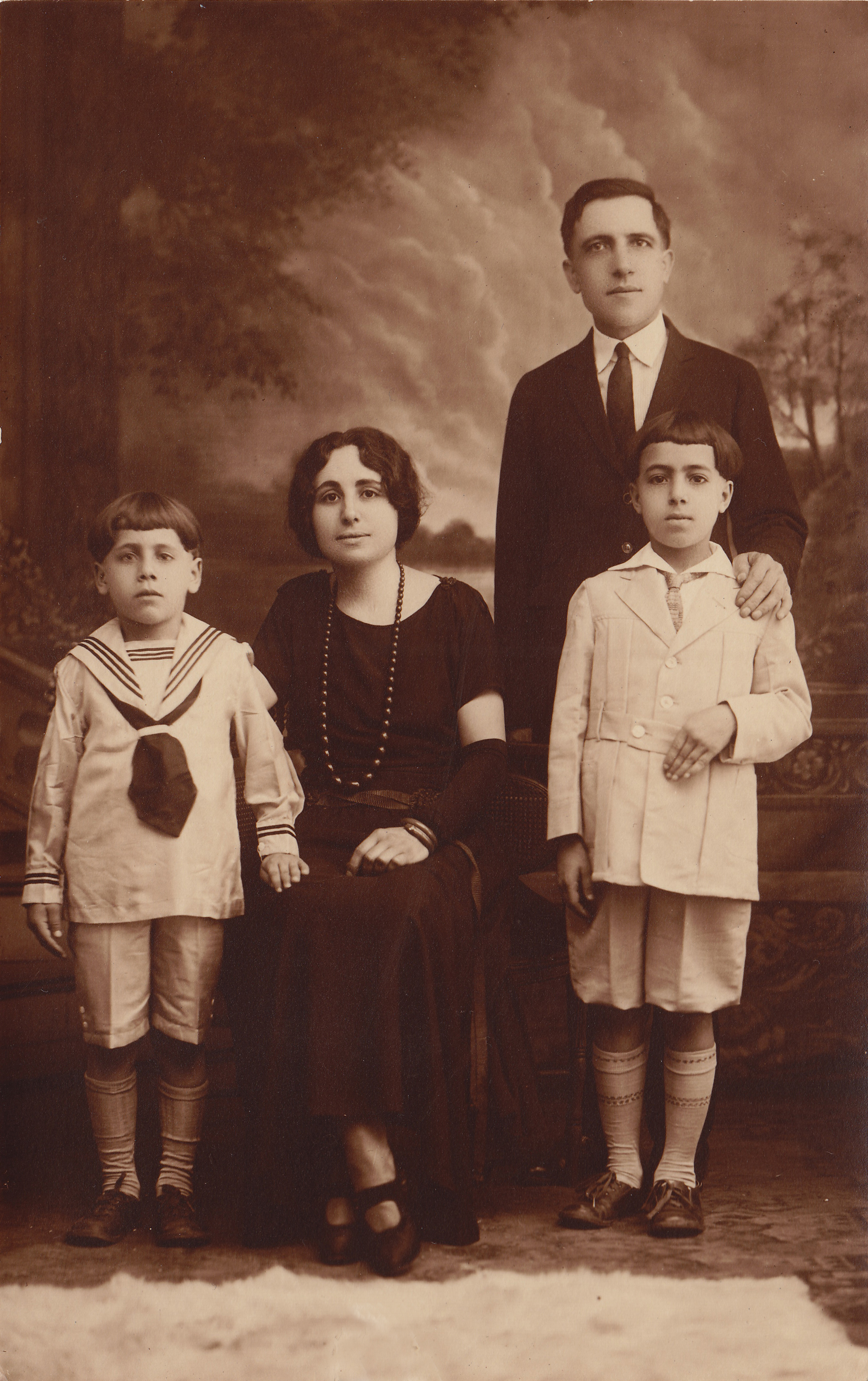
The picture shown here was taken in New York City in 1922. It is by "Iris Photo Studio, G. Fecarotta, Prop., 199 Bleecker St., N.Y." Vincent is 36 years old, Angelina is 29 years old, Joseph is 9 years old, and John is 7 years old.
On May 1, 1922, Vincent became a naturalized United States citizen. He was still living at 113 W. Houston Street and was 35 years old. Vincent never had a lifelong career, nor did he hold regular long-term jobs, according to older family members, and he was said to have suffered from, but never succumbed to tuberculosis. He was also said to have been an "Anarchist," in the formal political sense of that term.
In 1925, according the New York State Census, the family was still at 113 W. Houston Street. Vincent, now 38 years old, gave his occupation as a "tailor" and Angelina, 30 years old, did "housework." Joseph and John, now 11 and 8 years old, respectively, were both in school.
Angelina's parents, John and Maria MARINO, were no longer in the building, but another Frances Marino, 28 years old, was there, married to another John Marino, 40 years old, and with a child, Anthony, age 5.(Marino is a common name.)
During my father's school years the MANFREDI family lived briefly in Paterson, New Jersey, at the time a hotbed of Sicilian Anarchist sentiment, but they soon returned to Manhattan. Both my father and my uncle John got their Social Security cards issued in New York, so the family was living in Manhattan by the time they were old enough to work. My grandmother's Social Security card had been issued in New Jersey, however, so that is where she was living when she first got a job outside of the household. I have been unable to locate them in the 1930 Federal Census.
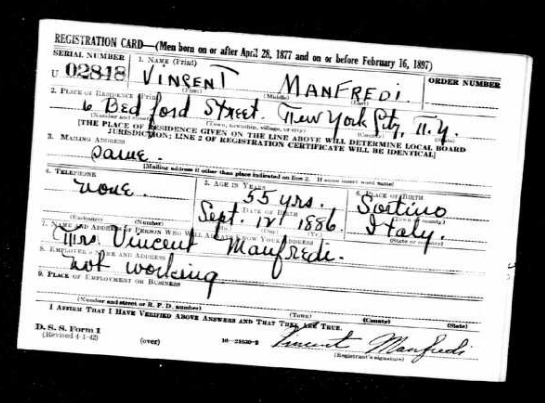
According to the 1940 Federal Census, the MANFREDI family was living as 6 Bedford Street in New York City, a featureless four-story apartment building on a very narrow old street just off of West Houston Street in the Italian section of Greenwich Village. Vincent was 53 years old, Angelina was 46 years old. Joseph was 26 years old, and John was 23 years old. Vincent gave his occupation as "salesman, electrical" and Joseph was an "office worker, office," but both of them were unemployed at the time, as was Angelina. Vincent had been unemployed for the prior 70 weeks -- about 1 1/2 years, but he noted that he had other sources of income. Joseph was apparently a temp worker or had recently been laid off: he had worked 24 hours the week prior to the census-taker's visit. John was a "music copyist, radio," and his job was listed as "public emergency work," in other words, a federally funded job under some agency like the WPA; he had worked 15 hours in the previous week, but had worked 24 weeks in the previous year.
Vincent's World War Two draft card again gave his address as 6 Bedford Street in New York City. His occupation was listed as "not working." He described his next of kin as "Mrs. Vincent Manfredi," not even according Angelina her own first name, which was typical of his patriarchal worldview as i knew it during my childhood.
My father did not like Vincent and so as a child in the 1940s and 1950s i did not see him often. He had a dour face and always wore a suit, as i recall. He made Angelina serve him at table, as if they were still living in 19th century Sicily. This too did not sit well with my father, who was a modernist and politically far to the left of center.
I was told that my grandfather was an inventor who had "developed locks and burglar alarms." He was often gone on mysterious trips. There is some reason to think that his burglar alarm company was somehow connected with the protection racket run by the Mafia in New York. His trips to the "sanitarium" for his supposed tuberculosis may have been jail or prison sentences.
As a young child, i knew Vincent as a rather distant figure. He spoke rarely and often seemed to want to stay in a different room from that in which social events were taking place. He read a lot and discussed world politics, but he expressed very little personal interest in individual human beings. I remember my grandmother telling him to come over and give me a hug, for instance, which he did awkwardly and stiffly.
According to my mother, Angelina doted on my father, whom she called "Joey," and she insisted that my mother, a German Jew, learn to cook all of the family's favourite Sicilian dishes "so that Joey would have something to eat." Angelina was a good cook and a good teacher, and my mother actually became a proficient Sicilian cook under her direction.
When i was young, Angelina still would make paper flowers, as she had once done to earn her living, but just for fun, and she also created rabbit puppets out of linen napkins. She was sentimental and emotional, and she believed in -- and taught me -- a great deal of Mediterranean folk-magic, including how to protect against stregheria (witchcraft) and how to ward off jettatore (the evil eye). She also taught me how to make spinach pie, which, she said, was "the Virgin Mary's favourite dish."
As i knew my grandmother, in the 1940s and 1950s, she was a registered nurse who lived in New York and travelled yearly to Saint Petersburg, Florida, where she cared for geriatric patients. Later she lived in California, still working as a private nurse for wealthy geriatric patients. I was told that she often separated from, but never divorced, Vincent. As i recall, Angelina enjoyed her new life as a nurse after she and her husband broke up. She liked the responsibility.
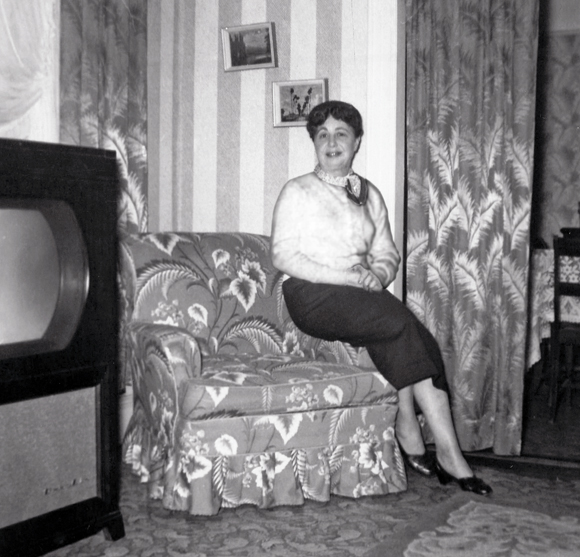
In this photo, taken around 1949, Angelina is in her apartment (possibly at 6 Bedford Street) with her brand new DuMont console television set. She is about 56 years old. On the wall behind her are two pictures; one of Lombardy cypress trees and the other of Washingtonia palm trees. Her drapes, rugs, and upholstered chair are a riot of art deco ferns, ivy, and philodendron leaves,
During the 1950s Angelina Americanized her name, for all subsequent records list her as Angela MANFREDI, not Angelina MANFREDI. I knew her both as Angela and Angelina, depending on who was talking to her or about her at the time. Strangely, Vincent and Angela, while not exactly living together, also never divorced. I have no idea what their relationship was like to them. To an observer, it made little sense. When Angelina retired from nursing, she settled in Saint Petersburg, Florida, for a number of years, but eventually both she and Vincent relocated to California, where their sons lived. Vincent died in 1974 in Long Beach, California. By 1975 and 1976, according to city directories, Angela was retired and living at 224 Cottonwood Street, Woodland, Yolo County, California. Her 1976 death certificate lists her as Angela MANFREDI, not Angelina MANFREDI. She was 83 years old when she died.
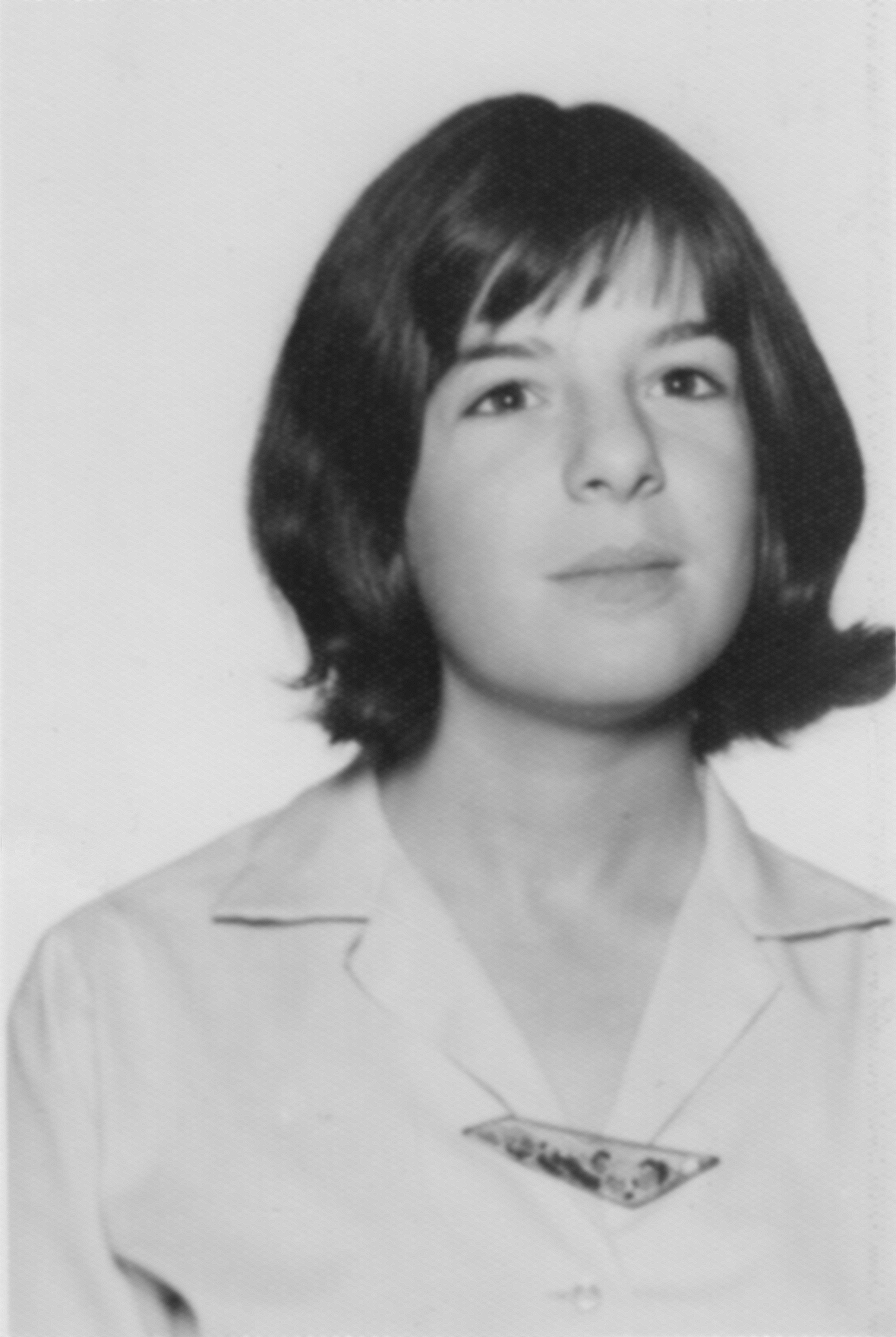
I am the only grandchild of Vincenzo and Angelina. The picture at left is of me, Catherine Anne Manfredi Yronwode, at the age of 16. I strongly resemble my grandmother, Angelina MARINO Manfredi. In this photo i am wearing a beautiful abstract enameled copper dress-pin my father made for me which included curls of copper wire, and blotchy splashes of white, pale cyan, yellow-green, turquoise, and red-orange fused glass. He had a little kiln and made this type of jewelry for years, even while working as a petroleum geologist.
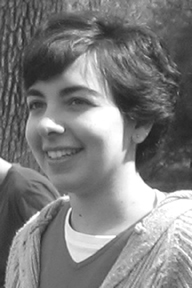
I found the picture at right, in black and white, via a google search on the name Percoco. This is a photo of an artist named Anne Percoco, born in 1984. She looks very much like me, my father, my grandmother, and my great aunt. There are many artists in my Marino and Percoco families. I wonder if she is a not-too-distant cousin of mine. If she sees this picture, maybe she will confirm my theory that we are related -- or maybe she will disprove it.
On August 21, 1923, in Manhattan, Angelina MARINO's sister, the artistic Francesca (Frances) MARINO, who had been born around 1897 in Castellamare del Golfo, Sicily, and was living in New York City, married a man named Francesco (Frank) PERCOCO. He had been born December 16, 1897 in Bari, Italy. Like members of the MARINO family, he too had artistic talent, and at one point supported himself as a "painter of picture frames," probably the elaborate gilded gesso frames popular at the time.
My great aunt Francesca (Frances) MARINO PERCOCO and her husband Francesco (Frank) PERCOCO had 4 children: Joseph PERCOCO, Virginia PERCOCO, John PERCOCO, and Maria PERCOCO. All the PERCOCO children -- my father's cousins -- were born during the 1920s.
According to the June 1, 1925 New York State Census, Frank PERCOCO (26 years old), Frances PERCOCO (24 years old) and their son Joseph PERCOCO (300 days old (that is, 10 months old, born July 31, 1924) were living in an apartment at No. 2 Avenue C in Brooklyn, New York. Frank was working as an "ice man," delivering ice to tenement houses that did not have electrical refrigeration.
Frank had been a U.S. citizen for only 4 years. Frances, also born in Italy, is recorded as having been a U.S. citizen for 22 years, but that was a mistake, because in the 1920 Federal census, she an her parents were all said to be unnaturalized "Aliens" and her father John MARINO got his naturalization in 1922. It is logical to suppose that both Frances and her mother Maria MARINO were also naturalized in 1922 -- and that the "22 years" recorded here was a mis-hearing of "since 1922."
When the Federal Census was taken in April 1930, the household was living on Van Dam Street in Queens, New York. Frank was no longer an ice man, but was an artisan, and and the family looked like this:
Frank [Francesco] Percoco, 31 [1899; actually Dec. 6th, 1897], Head, Immigrated 1920, Married at age 24,
		[actually age 26, in 1923], Alien, Painter of Picture Frames
Frances [Francesca Marino] Percoco, 29 [born circa 1901] Immigrated 1903 [wrong],
		Married at age 22 (1923), Wife, Alien, occupation None [Previous inconsistencies with
		the immigration date(s) of the MARINO family continue in this record.]
			Joseph (Giuseppe) Percoco, 5 [born July 31, 1924], Son
			Virginia Percoco,          4 years, 1 month, [born Feb 4 1926], Daughter
			John Percoco,              3 years, 3 months [born circa January, 1927], Son
			Marie Percoco,             1 year, 11 months [born circa May, 1928], Daughter

Missing from this census record, for reasons explained below, is
Frank Francesco Percoco, Jr. (1911 - 1997)
According to his World War II Draft Card Record, Frank Percoco was unemployed (on relief) in 1942, living at 211 Chrystie Street, in New York City, with his wife Frances Percoco. His date of birth was given as December 16, 1897, his age was 44, and his birthplace was Bari, Italy.
According to my father, all four Percoco siblings married and some had children.
JOSEPH PERCOCO: At Ancestry.com (https://www.ancestry.com/genealogy/records/joseph-thomas-percoco-24-1kg8848) i found that Joseph Thomas PERCOCO, born July 31, 1924 in New York City, New York to parents Francesca MARINO and Frank PERCOCO, married Ida Edith RIMAN (1921-2002), and died Dec 27 2002 in Orlando, Florida.
IDA EDITH RIMAN PERCOCO SIDENOTE: More details about Joseph (Joe) PERCOCO can be found in the obituary of his wife Ida Edith RIMAN PERCOCO from the Orlando Sentinel at https://www.orlandosentinel.com/obituaries/ida-edith-percoco-fl/
PERCOCO, IDA EDITH, 90, formerly of Orlando, FL died Sunday, Feb. 5, 2012 at the home of her nephew Daniel Inglima in Marble, NC in his company and that of her latest two cats. She was born May 6, 1921 in Toledo, OH, the daughter of Aaron and Fruma Leah Riman. On July 21, 1952 she married Joseph Percoco in New York, living with him in Flushing, Queens. They moved to West Milford, NJ then to Central Islip, NY and then to Orlando, FL. Mrs. Percoco worked as a technical illustrator for over 30 years. Studying nights, she earned a Bachelors degree in English in 1969, and a Masters degree in Library Science in 1971. She and her husband owned and operated a Dairy Queen in NJ for a number of years. After moving to Florida in 1978, she spent a couple more years working as a technical illustrator, and then she embarked on a new career, selling and managing real estate, and held a real estate brokerÕs license. In her spare time, she wrote and sold "Limericks and Mini-Poems" [1994], and "Every Life Should Have 9 Cats" [2001], as well as other books. She edited an AARP newsletter for years. She engaged in many artistic pursuits, including oil painting and creating Òwear-ableÓ art T-shirts, much of which she sold, as well as making knitted capes, and doing flower arranging. She was quite a seamstress, having sewn all of the square dance outfits that she and Joe used to wear during their many years enjoying square dancing and round dancing, together. She had a passion for protecting animals, and was a vegan so as not to bring harm to any. Until illness forced her to move to North Carolina, she enjoyed the weekly company of the Beardall WriterÕs Group, and an Orlando area Widow and Widowers group. She is survived by one sister Gertrude Gregory, MD of MI; six nephews; one niece; four great nieces and nephews; and three great-great-nieces and nephews. She was predeceased by her husband, Joseph, on Dec. 27, 2002; her brother, Samuel, on Nov. 18, 1962; brother, Simon, on Nov. 8, 1987; and sister, Sarah Inglima, on Sept. 19, 1992. She was cremated at Mountain View Funeral Home. A memorial service will held at 1 PM on Saturday, March 24 at her former residence in Orlando.
From the cover-copy of Ida Edith Peroco's book "Every Life Should have 9 Cats" we learn a little bit more about the lives of Joe and Ida Percoco. She wrote: "We adopted a street kitten, whom we named Mitzi, in 1953, and since then, we have had a cat, or a number of cats, ending in year 2000, with nine. And, for 15 years, we were lucky to have the friendship and companionship of our dog. He left us in 1997." Another of her books is also mentioned on the cover -- " A Is for Animal B Is for Bird" (1997).
VIRGINIA E. PERCOCO GUBITOSI: At Ancestry.com (https://www.ancestry.com/genealogy/records/results?firstName=virginia&lastName=gubitosi) i found that Virginia Elizabeth PERCOCO, born in 1926 to parents Francesa MARINO and Frank PERCOCO, worked as a secretary in an electrical appliance company according to the 1950 Federal Census. At MyHeritage.com (https://www.myheritage.com/names/virginia_percoco) i found that Charles Joseph GUBITOSI married Virginia Elizabeth Percoco in 1952, in Manhattan, New York City, New York, United States. She was 26 years old at the time of the marriage. As Virginia GUBITOSI, she died in 2013 in Fresh Meadows, New York City, New York, USA. Her SSDI record gives her full birth and death dates as Feb 4 1926 - Dec 24 2013.
CHARLES J. GUBITOSI SIDENOTE: I am not genetically related to Charles Joseph GUBITOSI (1927 - 1995), who married my first cousin once removed Virginia PERCOCO, but the name rang a bell with me because it is the birth name of the actor Robert ("Bobby") Blake who played Little Beaver in "Red Ryder" and starred in "Baretta" and murdered his wife. He was born Michael GUBITOSI ... that intrigued me enough to do a deeper dive. Charles J. Gubitosi (Dec 6 1927, New York - Mar 7 1995, Flushing, Queens, New York) was the child of Concetta GARGUILO (1894, Napoli, Campania, Italy - 1947) and Charles GUBITOSI (1885, Apice, Benevento, Campania, Italy - Aug. 17, 1963). Charles (Sr.) and Concetta had another child too -- Vincent Charles GUBITOSI (1919 - 1964) -- who is NOT the same person as Vincent Giacomo James Gubitosi (1906-1956), the father of Robert Blake. Whew. Dodged a bullet on that one, so to speak.
JOHN PERCOCO: I did not find a record for a John PERCOCO (1927 - UNKNOWN), born to parents Francesa MARINO and Frank PERCOCO at Ancestry.com.
MARIA PERCOCO: I did not find a record for a Maria PERCOCO (1928 - UNKNOWN), born to parents Francesa MARINO and Frank PERCOCO at Ancestry.com. My father told me that his cousin Maria PERCOCO married an African American man during the late 1940s and they lived in Queens, New York.
FRANK FRANCESCO PERCOCO, JR. (1911 - 1997): SEE ABOVE -- This person is NOT in "my" Percoco household on the Federal Census for 1930. However, at My heritage (https://www.myheritage.com/names/frank_percoco) we learn that "Frank Francesco Percoco was born on November 20 1911, in New York, New York, United States, to Francesco Frank Percoco and Francesca Frances Percoco (born Marino). Siblings: Frank had 4 siblings: Giuseppe Joseph Percoco, Virginia Percoco, John Percoco and Maria Percoco. Death: Frank passed away on July 15 1997, at age 85 in Brooklyn, New York, Kings County, New York, United States." THIS IS AN ERROR. If Frank Jr. was born in 1911, his father Frank was 14 and his mother Francesca was 10 years old -- and there would be a 13 year gap between the birth of their first child and the next four, who were born at approximately one year intervals from 1926 to 1928. Actually, Frank and Francesca married in 1923, at the ages of 26 and 22. Furthermore, my father clearly told me that there were FOUR children in this family, not FIVE. This parentage entry should be ignored (or amended or deleted) everywhere it is found on the internet.
JEWS AND SICILIANS: In the marriage of the Sicilian American Joe PERCOCO (my first cousin once removed) to the Ashkenazi Jewish American Ida Edith RIMAN, i see some interesting parallels to the marriage of my Sicilian American father Joe (Fred) MANFREDI to my Ashkenazi Jewish American mother Liselotte Fransiska ERLANGER. Liselotte's mother was named Ida, Liselotte also had a Masters degree in Library Science, and Liselotte also wrote and published books of poetry, fiction, and autobiography. The real truth is hidden in their DNA, however. You see, although i am ostensibly the result of the marriage of a Ashkenazi Jew to a Sicilian, and should be only 50% Ashkenazi Jewish, my DNA is 73% Ashenazi Jewish and 6% Sephardic Jewish, Bedouin, and Amazigh from North Africa. This means that either the Marinos or the Manfedis were Ashkenazi Jews or that both families were half Ashkenazi Jewish. I think the Marinos are more likely to be the side of the family that was Ashkenazi-Sephardic-Bedouin-Amazigh, and i speculate that this is why the cousins Joe Manfredi and Joe Percoco -- the half-Jewish sons of the crypto-Jewish Marino sisters -- felt comfortable marrying obviously Ashenazi Jewish wives.
At some point before 1910, John MARINO's nephew -- Francesco or Frank MARINO -- either emigrated to New York City from Sicily or was born in New York.
As noted above, when my great-grandfather John MARINO, with his wife Maria and their daughters Angelina and Francesca, landed in New York in October 1901 aboard the Tartar Prince, they stated that they were intending to live with John's sister, who was also listed as Maria's sister-in-law, and the aunt of the two girls. I believe that this woman was either John's unmarried sister, a Miss MARINO, or John's sister-in-law, a Mrs. MARINO the widow of his brother, a Mr. MARINO.
John's nephew Frank was, i believe, the son of the late Mr. MARINO; that is, his father was John's brother. He may have been a child, born in America, in 1901, when John and his family arrived, or he may have come over later.
Finding this particular Francesco or Frank Marino in New York City is impossible; there were dozens of Sicilian men with this name living there at the time. (For example, one promising suspect, found in the 1920 Federal Census, is the 24 year old Francesco Marino (born circa 1896), who immigrated to the USA in 1915. He was living alone as a "roomer" at 239 Elizabeth Street in the Lower East Side and was a labourer in construction. But is this "my" Frank Marino? I have no way of knowing.)
In any case, sometime before or after 1907, when my grandfather Vincenzo MANFREDI immigrated to America, his younger sister also came to New York City from Sicily. I do not know her name so i will call her, as my mother did, "Miss MANFREDI." This "Miss MANFREDI" married my grandmother Angelina's cousin Frank MARINO around 1915 and, according to my father, they had a son, Joseph MARINO, born in New York City, about 1918, a few years younger than he was.
"Miss MANFREDI" MARINO (Vincent's younger sister) was known in the family for her "terrible migraines" which lasted three days at a time. During these episodes she would draw closed all the curtains on her bedroom windows and lay in the dark on her bed, sometimes crying out loud with pain. My mother tried to meet her a couple of times in the late 1930s, but she was always "indisposed." This was after the "feud" (see below), but the excuses given were that she had "a migraine" and later that she was "having the change of life." For more on migraines, read on.
Vincent MANFREDI and his brother-in-law (and also cousin-in-law) Frank MARINO went into business together in the 1920s, "manufacturing burglar alarms," which my grandfather had "invented," according to family history. I have researched patent records but have been unable to locate any evidence of this activity. There is probable cause to think that they may have been engaged in another line of work, such as bootlegging, counterfeiting, or the protection racket.
According to my father, in 1928, when my father was 15, Frank MARINO and Vincent MANFREDI "had a falling out over the burglar alarm business that they co-owned." My grandfather never spoke to his sister again, because she took her husband's side in the dispute. The "excommunication" (as my father called it) of the former "Miss MANFREDI" and Frank MARINO from the family was so complete that my father Joseph MANFREDI never saw his cousin Joseph MARINO again.
Given such slim sources of identification and such incredibly common names, it is impossible to identify or locate my father's aunt, uncle, and cousin, but one possibility is the family of the Frank Marino enumerated in the 1930 Federal Census at 239 East 115th Street:
Frank MARINO, head, 38, born c. 1892 in New York, parents born in Italy, garment cutter
Mary MARINO, wife,  37, born c. 1893 in New York, parents born in Italy, no occupation
Joseph MARINO, son  11, born c. 1919 in New York, in school
John MARINO, son     9 1/2, born c. 1921 in New York, in school
Charles MARINO, son  5 1/2, born c. 1925) in New York, at home
It may not be a coincidence that the great falling out among the family factions -- the MARINOS versus the MANFREDIS -- coincided with the beginnings of a violent gang war among Sicilian Mafia members in America. This event, known as the Castellammarese War of 1928 - 1931, was primarily waged between families with roots in Castellammare del Golfo, Sicily (also known as Castello Mare and Castellamare) and other Sicilian mobsters with roots outside of Castellammare.
My grandmother and her sister were born in Castellammare del Golfo. Their mother Maria GIANGRASSO and father John MARINO, who were living in New York City with them, were from Castellammare del Golfo. My grandmother's cousin Frank MARINO was also Castellammarese. In fact, many American Mafia members were born in Castellammare, and were contemporaries of my grandparents, including Michele Adamo, Girolamo Asaro, Joseph Barbara, Francesco Buccellato, Joseph Buccellato, Joseph Bonanno (b. 1905, d. 11 May 2002 - Tucson), Giovanni Bonventre, Vito Bonventre (b. 1875, d. July 15, 1930 - New York, murdered), Pietro Crociata, Pietro Caiozzo, Giovanni D'Anna, Gaspare DiGregorio, Sebastiano Domingo, Giovanni Fiordilino, Camillo Galante, Francesco Garofalo (a.k.a. Frank Carroll) (b. 1892, d. in the 1970s, drug trafficker) Stefano Magaddino (b. 1891, d. 19 July 1974 in New York), Salvatore Maranzano (b. 1886, d. 10 September 1931 in New York, murdered) Gaspare Milazzo, Michael Monte, Francesco Puma (b. 1886, d. November 4, 1922 in New York, murdered), Joseph Ristuccia, and Giovanni Tartamella.
These men and others in their crew, who referred to themselves as "The Good Killers," were responsible for about 125 murders in New York, Detroit, Pittsburgh, and Denver between 1907 and 1931. Many of them met violent deaths before and during the Castellammarese war, which was fought by the Joe Masseria clan against the Salvatore Maranzano clan for the leadership of the Italian Mafia in New York City.
Meanwhile, my grandfather Vincent MANFREDI may have been related to Alfredo MANFREDI (a.k.a. "Al MINEO" a.k.a. "Manfredi MINEO"), a non-Castellammarese Mafia leader (born in Palermo, Sicily, in 1880), who was killed on November 5, 1930 by the Castellammarese faction during the Castellammarese War.
By the time i was born, none of my elders would talk about why the "burglar alarm company" debacle had destroyed so many family ties in 1928; the "feud" was long over and done with, and the fences were never mended.
My grandfather Vincent's father, Mr. MANFREDI of Syracusa province, had remained in Sicily. After his first wife (my great grandmother) died, he remarried and had a third child, born circa 1920, who was called "The Little Uncle" or "The Little MANFREDI" because he was younger than my father but was his half-uncle. The Little Uncle never came to America, but Vincenzo sent money to help support him and his mother (Vincenzo's step-mother) after the elder Mr. MANFREDI died.
As my father Giuseppe Francisco MANFREDI adopted American ways, he chose to be known as Joey MANFREDI, Joe MANFREDI, Joseph MANFREDI or Joseph F. MANFREDI and, after reaching adulthood, by the nickname Fred MANFREDI. I knew him primarily as Fred MANFREDI. He and my mother Liselotte Fransiska ERLANGER MANFREDI were married in 1940. He was an abstract artist and a frame-maker when i was a child, made beautifully modernistic enamel jewelry, and was a landscape photographer with his own darkroom, but he also had a long career as a petroleum geologist and geological cartographer for Standard Oil of California.
My father and his brother Giovanni Francisco (who had Americanized his name to John Frank Manfredi) both studied painting at the Art Students League under George Bridgman.
My father also took personal lessons from Beauford Delaney (1901-1979) [often misspelled Buford Delaney] and Joseph Delaney (1904-1991), a pair of African American brothers from Knoxville, Tennessee, who lived and worked in Greenwich Village. He paid for his lessons with the Delaney brothers by modelling for them; he had been a champion swimmer in high school and had a slender, athletic body. Under the tutelage of Beauford Delaney, my father painted portraits. During the late 1930s he worked in the "easel section" of the WPA as an artist.
My father told me that Beauford Delaney, who was homosexual, was briefly in love with him. My mother told me that for a while my father had lived with Beauford. I have been asked by those interested in art history if they had an affair, but i do not know. My father never said they did, although my mother thought it was possible, given my father's inclination toward sexual experimentation in his youth.
Right before World War Two, my father went to Italy to paint, touring and living in the small hill towns of Tuscany and studying late Medieval art. While he was abroad, getting "in touch with the spirit of Dante," as he later put it, his lover and fiancee, an Italian-American woman whose name i only know as Catherine or Caterina, died suddenly of pneumonia. He was devastated by her death and returned home. He would later name me after her -- and i possess a portrait he made of her holding a red Anthirrium flower. He often painted these flowers, and used them as symbols of sexuality.
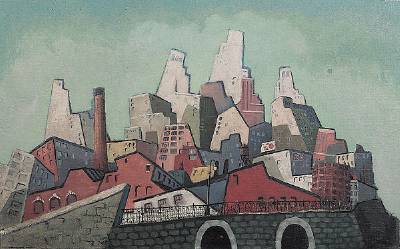
Shortly after he returned to New York, my father met my mother, a Jewish woman who was a recent immigrant from Hitler's Germany. Around this time his work became progressively abstract, The painting shown above is "Skyscapers," one of my father's New York cityscapes. It was shown at a group exhibit by the Bombshell Artists Group at the Riverside Museum in 1942. It was also reproduced in the New York Post newspaper article about the Bombshell Group and its members, which appeared on March 2, 1942. In 2000, under the spurious title "Cityscape," it resurfaced and it was sold at auction under the spurious name "The Modern City of Babel." In 2006 it again sold at auction, this time titled "City Skyline."
The Bombshell Artists Group had formed in the fall of 1941 as the result of a controversy over modernist art that was conducted in part in the pages of the New York Times newspaper. The Group held its formal self-inauguration in late 1941 at a meeting at the New School for Social Research to promote the mounting of a show by living artists working in a variety of media.
According to an article by Henry Beckett in the New York Post newspaper, membership in the Bombshell Group was restricted to artists who submitted three paintings apiece and whose work "was approved by a general vote." From this general membership a "council of 15" was picked to lead the group, also on the basis of the paintings they had submitted. Becket reported that "The artists meet in a cellar that they call The Bomb Shelter at 51 West 10th Street." With war in progress, he also noted that "Air raid wardens occupy the room adjoining."
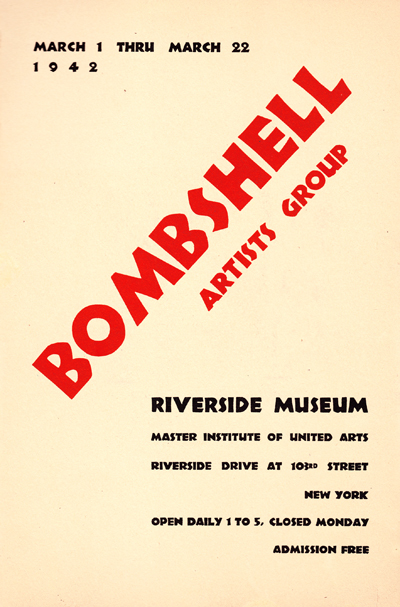
Somehow out of all the submitting of paintings and voting, my father was chosen to be the group's "exhibit chairman." In March, 1942 the Bombshell Artists Group held a large exhibition at the Riverside Museum of Art, featuring the work of 60 artists, among them Joseph Delaney, Abraham Yurberg, Fred Buchholz, Anthony T. Pisciotta, Ben Wilson, Arthur Deshaies, and Harold Ambellan.
"This is a fight against the smugness of establsihed and smoldering taste," the group announced. "It loosens the grip of cultivated, but stagnant, appreciation."
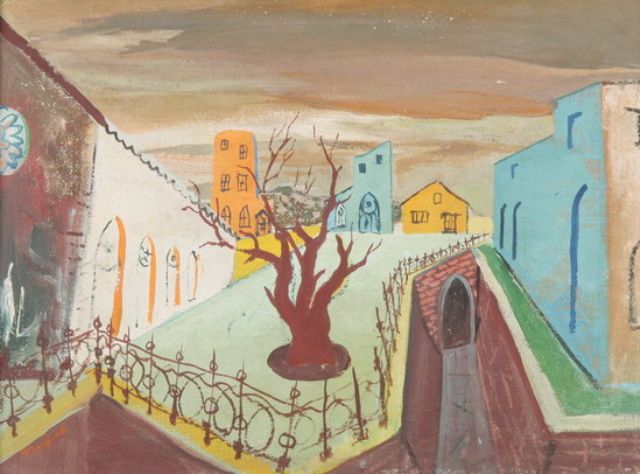
In November, 1942 eight members of the Bombshell Group (Fred Buchholz, Edie Else, Jean Morrison, Patricia Phillips, Hyde Solomon, Ben Wilson, Dr. Abe Yurberg, and my father), now styling themselves The Hetero Painters, held a group show at the Pinacotheka gallery at 20 West 58th Street in New York City. According to the catalogue of this show, Joseph showed the paintings "Ecclesia," "Decorative Motif," "Laocoon," and "Composition." The show was written up in the New York Times, the New York Herald Tribune, Cue, and Art Digest.
"Laocoon" attracted quite a bit of attention at the time. Arts Magazine (Volume 17, Art Digest, Inc., 1942) reported "Joseph Manfredi's Laocoon took top honors with the critics, the artist sharing the show's highest place, in the opinion of Carlyle Burrows of the [New York] Herald Tribune." Howard DeVree of the New York Times also praised this painting, writing on November 8, 1942 of a exhibit which included "four diverse paintings by Joseph Manfredi, whose canvas of a distorted tree, called 'Laocoon,' rather runs away with the show." In 2006 "Laocoon" resurfaced and was sold at auction under the spurious name "Piazza."
In 1942, even as the abstract "Skyscrapers" and "Laocoon" were attracting favourable notices, my father had a sudden change of direction. He decided to leave behind "the literal" and to embrace abstraction more fully. From this point forward, his earlier interest in "architectural juxtaposition" (the treatment of architectural elements as materials for visual collage) waned and he became interested only in the "line and form" of non-representationalism and non-objectivism.
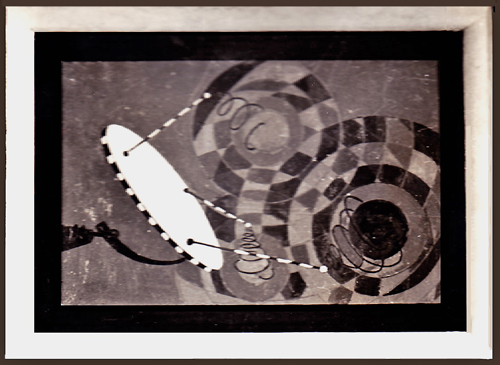
During the time that my father was active with the Bombshell Group, Peggy Guggenheim opened a gallery-museum called Art of This Century and purchased one of my father's paintings. I have no record as to which one it was. It may have been "Skyscrapers," as that had been published several times by then, or it may have been "Laocoon," but i beleive it was the painting reproduced here from a small black-and-white photo.
I don't know the name of this piece, and i don't know what colour palette it was executed in, but the photo was pasted into an album by my father, underneath the letterhead of the Solomon R. Guggenheim Foundation, along with a review from Art Digest dated June, 1942 and headlined "Non-Objective." Describing the "non-objective" paintings in the Guggenheim exhibit, the writer noted "Among other Americans in the upper gallery, the staccato Manfredi gives off a sharp rat tat of drum-sticks." As i see it, this is my father having an ocular migraine attack that is about to become a painful headache. Migraines are found throughout my Manfredi lineage and this scintillating scotoma pattern is one that i am very familiar with. (I also inherited my father's tendency to develop kidney stones.)
As can be seen by this little snap-shot, the painting was framed, and i recall being told that it was around this time that my father became a dedicated frame-maker, buying professional carpentry tools and crafting his own modernist frames from a variety of unlikely woods. The frames themselves were also often painted, and they sometimes took the form of shadow boxes or were otherwise integral to the works of art they contained. It is interesting to note that his aunt, Frances MARINO, the former millinery trimmer, had married the artistic Frank PERCOCO, a man who made elaborate picture frames for a living; i have wondered if my father's interest in framing sprang from watching his uncle at work when he was young.
The Hetero Painters disbanded rather rapidly, the Bombshell Group held a second show, and in 1944 another remnant faction of the Bombshell artists emerged under the name The League of Present Day Artists, but by then my father was on the West Coast and no longer a member. The Group / League continued to hold annual group shows for a number of years in New York City.
My father did not wish to bear arms against his fellow Italians during World War Two and he knew that by working in a defense plant he would be exempt from the draft, so in 1943 or 1944, he and my mother, who had separated, moved to the San Francisco Bay Area and reunited. My mother worked at the Air Reduction Company (now Airco) in Richmond and my father worked in a nearby shipyard on Mare Island, where he made a series of wonderful semi-abstract paintings of shipyard workers and machinery, using paints he "liberated" from the shipyard itself -- rust-red primer, battleship grey, and signal yellow. These have all been lost, as far as i know, for although i kept them in a hidden crawl space in our attic, my mother found them and threw them out when i was in college. for which i never forgave her.
My father's brother Giovanni MANFREDI was known by the Americanized name John Frank MANFREDI or, in later life, when he was a beatnik, as Man Fredi or Man Freddy. He was famous in the family for having worked as a taxi-cab driver in New York City while studying art and literature and then, shortly after my mother and father separately moved from New York to California during World War Two, for having "abandoned his taxi in the middle of Times Square" with a note on the windshield that read, "There is no more poetry in my life." He then hoboed his way to the Bay area and joined up with my parents.
According to my mother, during World War Two, while John was living with my folks, he had "a notorious affair with a very wealthy California heiress" who had "run away from home." Her name was Catherine. She moved in with them and John wrote poetry for and about her. One day John was busted for shop-lifting tampons for Catherine. In order to raise money to bail John out of jail, Catherine called her parents, and this led the detectives who were searching for Catherine to show up at the house and, according to my mother, "she was underage or something and they took her away while John was in jail." At his point, apparently the authorities were bribed, John was bailed out, and the charges he faced of shop-lifting and statutory rape were dropped on the condition that he "never try to contact her again." My mother had contempt but a bit of pity for the hapless Catherine: "She went back to her upper-class world, where all of her tampons were provided for by Mommy and Daddy, and we never saw her again." John's lover was always referred to by my mother as "the Second Catherine," the first one having been my father's dead lover of his youth, whom my mother had never met.
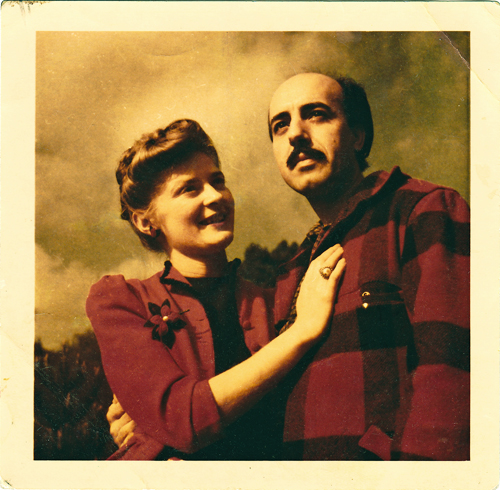
My parents' marriage was tumultuous, with several separations as they moved back and forth between Berkeley and San Francisco, together and apart, with and without Uncle John. They took on other lovers (on both sides), smoked marijuana, experimented with communal living and open relationships, and even had one illegal abortion during the early 1940s, when it seemed that having a child would put further strain on their unhappy partnership. After many break-ups and reconciliations, when the war was finally over, my parents decided to become ... parents. They settled down together just long enough to have me, their only child: I was born Catherine Anna MANFREDI in San Francisco on May 12, 1947. This nifty little Socialist-Realism style portrait of them, taken somewhere in the Bay Area on a cloudy day, while my mother was pregnant with me, speaks to their interests at the time; she clinging to him, her hair still done up in German-refugee braids, he looking off into the weather, Americanizing himself with a woolen lumber jacket.
It was my fate to be named after "the two Catherines," my father's ex and my uncle's ex. My mother did not like this idea much. She had wanted to name me Clara, after an aunt of hers, but, she said, she was "overruled."
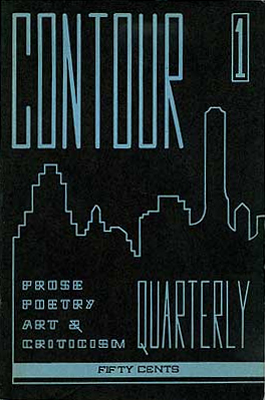
Shown at right is the cover that my uncle John drew for the art and poetry magazine "Contour Quarterly" No. 1, edited by Chris Maclaine and published in Berkeley, California in 1947, the year of my birth. It contains works by Robert Duncan, Bern Porter, Jack Spicer, Philip Lamantia, Hugh O'Neil, Larry Pitt, Thomas Gill, Chrisrambo, Janis Mark, John W. Aldridge, Roff Thomas, George P. Elliott, Madeline Gleason, Richard Moore, Albert Wyman, Neely, Jordan Belson, Ken Curran, Leonard Wolf, Thomas Parkinson, Marshall Neel, and Howard Rogers. Most of these people were friends of my parents. One of them, Ken Curran, went on to be an art teacher at Berkeley High School.
AN ASIDE On KEN CURRAN: Kenneth G. Curran was immensely important to the unfolding of my artistic work. The world-famed wire sculptor Elizabeth Berriean also studied under Ken Curran and cites him as the seminal influence on her artistic development. Strangely, when my soon-to-be son-in-law David Greenstone showed me his own wire sculpture, circa 2005, i recognized at once the techniques that Ken Curran had taught us forty years earlier. Berrien's tribute to the teaching skills of Ken Curran are here: http://www.wirelady.com/berrienwirecurranpage.html and well worth reading. Like her, i too have awed and fond memories of "the supply room."
After the War, my father's art changed as he moved more strictly toward non-representationalism and non-objectivism. He found work for a while by painting designs for upholstery cloth and coffee table tiles -- giant philodrendron leaves, sexy anthirrium flowers, and the exotic fruits of magnolia trees -- but his own art was more rigorously limited, often utilizing repetitive variations of shapes that were personally meaningful to him and that appeared over and over in his paintings, in various contexts. Among these shapes, which generally were presented in distorted or cut-and-reassembled form, i can often recognize (because he told me what they were) the skeleton of a fish, a bird sitting on a telephone wire, and a rounded shape with a hole in it, apparently derived from a naturally holed rock he had picked up on his travels, and which he carried with him for decades. This small holed stone looked a bit like a human profile with a firm jaw and jutting nose. My mother jokingly refered to it "Primitive Man."
My father also made many paintings with applied surfaces of sand as well as colour-fields of paint. The sand was selected from specific and often remote areas to which he had hiked for the purpose of acquiring it. These works are quite different than his early portraits and cityscapes. They are notable for the precision with which the fields and lines of paint were laid down. Many of them feature unusual "earthy" colour combinations, including chartreuse and deep forest green with stripes of bright cyan, ochre, and white. I remember him painting some of these and building frames for them in the back yard when we lived in Fresno, California, where my mother was attending college in 1951 - 1952.
My father eventually bought professional photographic equipment, to document his paintings, and by the late 1950s he built his own dark-room, embarking on a mid-life hobby of black and white photography featuring ruined and weathered buildings, gnarled trees, and wind-sculpted desert rock formations. (I used to refer to him as "the Ansel Adams of aridness.") During this same time-period, he took up the making of abstract modernist enamel jewelry on copper -- bright, jewel-tone brooches, screw-back and clip-back earrings, and pendants with applied wire spirals that he baked in his own enamel kiln.
Early in the 1950s, according to my mother, my uncle John MANFREDI left Berkeley, California, to "live in Mexico with the Indians and take peyote." According to her, he was "into having mystical experiences." Some documentary evidence of this wild story does exist: On March 6th, 1952, the Mexican government deported my uncle John and delivered him to the U.S. immigration service in Laredo, Texas, for having overstayed his tourist permit. The authorities listed his race as "Italian" and his birthplace as New York City in 1917. His last permanent residence was given as Berkeley, California, his occupation as "painter and electrician" and he stated that his mother was Angela MANFREDI, then residing in the affluent town of Belmont, California (working as a private geriatric nurse, most likely). He was 35 years old at the time. He was said to have "fair" complexion, brown hair and blue eyes (i remember them as grey), and he was 5' 6" tall.
My uncle John was a talented artist, but his creativity was stunted because during the 1950s he became a heroin addict. He was incarcerated and institutionalized for drug abuse and petty theft a couple of times during my childhood.
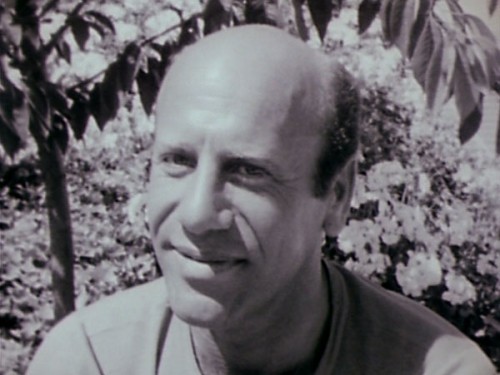
This photo of my uncle John Manfredi (Giovanni Francesco Manfredi) was taken in late 1952 or early 1953, when he was about 36 years old. It appears in a strange underground film by Christopher Maclaine called "The End," -- which is a nihilistic montage of images dealing with themes of sexuality, shoe fetishism, male violence, suicide, drug addiction, beatnik and bohemian life in San Francisco and Berkeley, and the threat of nuclear war.
Thanks to the San Francisco Museum of Modern Art (SFMOMA), Brecht Andersch, and Wilder Bentley II for posting the image and captioning it so that i could find it online. This is my uncle as he looked during my childhood, as i remember him well. For more on "The End," see http://blog.sfmoma.org/2011/03/christopher-maclaine-17-the-end-tour-15-climax-b/
In 1951, my parents, listed as Joseph F. Manfredi and Liselotte F. Manfredi, were living with me at 3644 McKenzie Avenue in Fresno, California, according to the city directory. My father gave his occupation as "draftsman." My mother was in college, and i turned 4 years old.
While in Fresno attending college, my mother had been having an affair with a librarian named Henry Madden (the library at Fresno State University was named after him when he died). By this time my father was as tired of my mother's infidelities as she was bored with him. In May of 1952, when i was about five years old, we moved back to Berkeley, where my mother embarked on getting a master's degree in library science, and my parents separated. They saw each other off and on, but eventually they divorced in 1953. I remained with my mother in Berkeley. She supported herself as a librarian, writer, antiquarian book dealer, publisher, and teacher. On April 7, 1956, she married my step-father, William Kenniston Glozer, born in 1921 in Chicago. (And that's when my troubles began, as they say.)
My father moved to Sacramento, where a city directory for 1953 lists him as a "draftsman" for Standard Oil, living at 816 2st Street. He got a day job with Standard Oil as an oil-field map-maker and, eventually, by lying about his (nonexistent) credentials from Princeton University (which he had never attended), he became a very well paid and respected oil-field geologist. In Sacramento he met and married his second wife, a social worker named Rose Mary REED. They were married on February 18, 1955 in Sacramento. By the late 1950s they had moved to Monterey Park in Southern California. In 1963, they were at 1049 Bradshawe Avenue in Monterey Park, and my father was listed in the city directory as a "Geological Draftsman" at Standard Oil. When i was in my early twenties, they were back in San Francisco, and they later moved to Davis, a small town near Sacramento.
I rarely saw my father after the divorce -- only once a year for two weeks during each summer's school vacation, until i left home. He had some of the distant personality of his father, Vincent. He was extremely interested in world politics, modernist classical music, and his own hobbies of photography, enamel jewelry-making, and exploring the arid desert areas of the West with Rose in their Volkswagen Combi Camper, but he had little to say to me.
By contrast, after my father moved away, I saw my uncle John fairly often, as he remained in Berkeley. He always greeted me effusively and lovingly when we met on the streets and he came by our house to see me every once in a while, even though my mother had remarried and did not like him coming around. He wrote illustrated poems for me, and he also embarrassed me by being so obviously stoned and weird on Telegraph Avenue while i was trying to fit in socially with a group of much straighter kids.
My uncle John died on July 16th, 1970 in Norwalk, Los Angeles County, California, according to the Social Security Death Index. Why he was in Southern California at the time i do not know, but around that time my mother told me that he had again gone to Mexico, where "he took peyote with the Indians" and that he "had an Indian woman he was shacked up with." After i reconnected with my father in the 1980s, i was surprised when he told me that uncle John had "died from throat cancer, caused by smoking," because according to my mother, John had "died from a drug overdose." I can give no preferential weight to either account of the cause of my uncle John's death because both of my parents would have had reasons for telling the truth and also for not doing so. In any case, my uncle John was only 53 years old when he died. He had no children, to the best of my family's knowledge.
In 1970, when i phoned my father to tell him that he was a grandfather, his immediate response was, "Do you know who the father is?" -- which i found very insulting -- but the conversation went downhill from there when he said that my partner Peter and i were not to bring our baby down from Mendocino County to visit him in San Francisco because, as he put it, "my house is not a crash pad."
At that point i stopped attempting to relate to him, and i did not see or hear from him for almost 20 years, until we resumed contact at the behest of my second daughter Althaea YRONWODE during the late 1980s.
Vincenzo and Angelina lived well into their 80s. Vincent died on January 15, 1974 in Long Beach, California, at the age of 87. Prior to his death he had also lived in Signal Hill. Angela, who lived with my father Fred and his second wife Rose toward the end of her life, died on December 19th, 1976 in Davis, California. She was 83 years old.
The older my father got, the brighter the colours he used in his paintings, until, toward the end of his life, he was working in an array of festive hues such as turquoise, cerulean, rose, white, peach, sienna, and yellow.
Even though he disdained representationalism in his later life, he enjoyed sketching rural California landscapes on paper with pastels and watercolour -- although he never kept these pieces around the studio and never painted such scenes on canvas.
Rose and my father had no children but had a very happy marriage. Rose died in Davis, California, of a stroke, on September 1, 1990. She was 78. Shortly thereafter, my father moved to Nogales, Arizona, to resume his old life as an abstract painter. He died there, at Holy Cross Hospital, on September 13, 1996 from prostate cancer. He was 82.
Unbeknownst to my father, his name -- Joseph / Joe Manfredi -- was used by my writer friends at Marvel Comics as the legal name of a Sicilian Mafia boss character better known as the villain Silvermane. The homage was intentional, not a coincidence, and it has always given me a grin to know that my father is a Marvel villain.
If you think you are related to me, please drop me a line. I would like to contact any family members to exchange photos and information. I have a few photos of the GIANGRASSO, MARINO, and MANFREDI families, but none of the PERCOCO family.
Summary (with the inclusion of unsourced records from The Church of Latter Day Saints,
which performs a lot of free genealogical research):
1. Giovanni John MARINO -- my great-grandfather
+ Maria GIANGRASSO - my great-grandmother
+ Vincenzo Vincent MANFREDI -- my grandfather
3. [Francesco?] MANFREDI -- my uncle
3. Giuseppe Francesco Joseph F. Fred MANFREDI -- my father
+ Liselotte Fransiska ERLANGER MANFREDI GLOZER -- my mother
3. Giovanni Francesco John MANFREDI -- my uncle
2. Francesca Frances MARINO PERCOCO -- my great aunt.
+ Francesco Frank PERCOCO -- my great uncle.
+ Ida Edith RIMAN PERCOCO -- daughter of Aaron Riman and Fruma Leah Rozanski Riman
3. Virginia PERCOCO GUBITOSI -- my father's cousin.
+ Charles Joseph GUBITOSI -- son of Charles Gubitosi (1885, Apice, Italy - 08/17/1963) and Concetta Garguilo (1894 Naples, Italy - 1947)
3. John PERCOCO -- my father's cousin.
3. Maria PERCOCO -- my father's cousin.
+ Female UNKNOWN
+ "Miss MANFREDI" MARINO -- my father's aunt.
1. Unknown Brother MARINO #3
1. Unknown Brother MARINO #4
1. Unknown Sister MARINO #
According to LDS records, he was born "About 1870,
Castellamare del Golfo, Sicily," married in "About 1892, New York City"
and died "About 1934, New York, New York." Note that his marriage date does not
easily accord with my father's statement that John MARINO was
"a mounted policeman and a detective" from Agrigento who, while a young man in Sicily,
wanted to "retire and open a produce shop" but for some "political"
reason, was denied a license, so he emigrated to
Massachusetts circa 1895 - 1897 with his wife Maria and
daughters Angelina MARINO (born in 1893 in Castellamare)
and Francesca MARINO (born in 1895 in Castellamare) and
then relocated to New York City. Either the LDS has entangled another John
MARINO marriage record with my family or John and Maria came to America twice,
once prior to their marriage and then again after the births of both of their daughters.
Also note that, according to the ship's passenger record, he has a sister in America,
with whom he intended to lodge himself and his young family.
The LDS unsourced records list her as having been
born "About 1872" in "Castello Mare, Italy" [sic] (Castellamare, Sicily). They state
further that she was married in "About 1892, New York City" and died "About 1937, New
York, New York." Federal census records result in her having other birth years:
1910: 38 Years old -- born 1872 (6 years younger than the age John stated at the time)
1920: 42 Years old -- born 1878 (17 years younger than the age John stated at the time)
1930: 60 years old -- born 1870 (10 years younger than the age John stated at the time)
2. Angelina Angela MARINO MANFREDI -- my grandmother
1. Unknown Brother MARINO #2
07/27/1893 Castellamare del Golfo, Sicily - 12/19/1976 Davis, Yolo County, California
Notice that this does not accord well with Angelina's father Giuseppe John MARINO and
mother Maria GIANGRASSO MARINO having been married, according to LDS records
"About 1892, New York City" -- unless they sailed back to Sicily to give birth to her,
then RE-immigrated in 1900. (They gave 1900 as their year of emigration on various
other documents.)
09/12/1886 Sortino, Syracusa Province, Sicily, Italy - 01/15/1974 Long Beach, California, USA
He had at least one sister (Miss MANFREDI) and a half-brother ("The Little MANFREDI").
According to the United States Federal Census
See above for Census and Draft Card information.
?/?/1911-1912 New York City - ?/?/1911-1912 New York City
10/03/1913 New York City - 09/13/1996 Nogales, Arizona
4. Catherine Anna MANFREDI YRONWODE -- me (I have one daughter and two grandchildren)
01/06/1917 New York City - 08/16/1962 Norwalk, California
According to LDS records, she was born in 1895
in Castellamare del Golfo, Sicily, married in New York City in 1915,
and died in New York City in 1963. The US Federal Cenus of 1930 notes that
Frances Percoco, born about 1901, was living with her spouse Frank Percoco, born about 1899,
in New York, New York. These birth dates are 6 years off.
According to LDS records,
he was born in Messina, Sicily around 1892, married in New York City in 1915,
and died in New York City in 1957. The US Federal Cencus of 1930 notes that
Frank Percoco, born about 1899, was living with his spouse Frances Percoco,
born about 1901, in New York, New York. These birth dates are 7 years off.
3. Joseph (Giuseppe) PERCOCO -- my father's cousin.
07/31/1924] New York City - 12/27/2002 Orlando, Florida
05/066/1921 Toledo, Ohio - 02/03/2012 Marble, North Carolina
Siblings: Sarah Goldie Riman Inglima, Simon Eli Riman (Mar 20 1929 - Nov 8 1987), Gertrude Riman Gregory, Samuel David Riman
02/04/1926 New York City - 12/24/2013
12/06/1927, New York - 03/07/1995 Flushing, Queens, New York
Sibling: Vincent Charles Gubitosi 1919 New York - 1964
circa January, 1927 New York City -
circa May, 1928 New York City -
Born, married, and died in Sicily.
John MARINO had "three brothers" born in Sicily who remained in Sicily and died there.
One of these brothers was the father of
Frank MARINO who emigrated to the USA. The names and relative birth
order of these brothers is not known to me. I am going to assign Frank
MARINO to Brother #2, purely for the sake of convenience.
Born, married, and died in Sicily.
2. Francesco Frank MARINO -- my grandmother's cousin; also my father's uncle by marriage.
Frank MARINO was apparently the nephew of Giuseppe John MARINO. He
would have been born in the 1880s in Sicily
and would have been in America from 1890 - 1900 onward.
He married my grandfather's younger sister, "Miss MANFREDI"
about 1916 in New York City. His S.S. card
-- if he had one -- would have been issued in New York state.
This name is very common. There are 296 men named
Frank MARINO listed with the Social Security Administration.
Born in Sicily, probably about 1888 - 1890; in America from about 1900.
Probably married about 1916 in New York City. She had at least one brother (Vincenzo Vincent MANFREDI)
and a half-brother "The Little MANFREDI").
3. Giuseppe Joseph MARINO -- my father's cousin.
The son of Francesco Frank MARINO and "Miss MANFREDI," this man would have been
born about 1916 - 1918, probably in New York. Joe Marino or Joseph Marino
is a common name. There are too many prospects to list.
Born and died in Sicily.
Born and died in Sicily.
Born in Sicily; she was living in the USA in 1901 when Giovanni and his family declared
that they would be living with her in America upon their arrival.
Rose Mary REED, my step-mother, was a California native, born September 21, 1911 near Sacramento, California. Her mother's maiden name was Rose MATHER. I know little about the REED or MATHER families of Yolo County, California, except that Rose told me that part of the family had long ago moved west from Dixon, Illinois, perhaps during the 19th century. (She mentioned this to me one day when we were discussing politics; she strongly opposed California Governor and later United States President Ronald Reagan's social policies, and she said that it was odd that he was born in Dixon, IL, where part of her family came from.) Rose had no sisters, only brothers -- Hayward REED, Caleb REED, Ogden REED, and Marvin REED -- whom she helped raise, because she was the oldest child. The REED family had owned a very large pear orchard when Rose was girl. It was named Rose Orchard, after both her mother Rose MATHER REED and herself, but by the time i met her, in the mid 1950s, the land had been sold and she was a social worker with very progressive political views.
Here is some information on Rose REED's family, from a history of Yolo County and from contemporary obituaries. This material was transcribed for the web by Sandra Harris at cagenweb.com; i have amended the punctuation and spelling slightly and have added my own comments in [brackets].
Hayward REED listing in "History of Yolo County":Hayward REED [I], a prominent California orchardist, was born near Washington, Yolo County, on Feb 15, 1876. [This Hayward REED was my step-mother Rose's grandfather.] His parents were Charles W. and Abbie (JENKS) REED, natives of NY and IL. [This accords with what Rose told me about part of the family coming from Dixon, Illinois, in the 19th century].From obituary in Marysville Appeal Democrat:In 1851 Charles came to California via Panama, bringing with him 45 varieties of pear trees. After selecting the Bartlett as the type best adapted to this climate, he established a nursery at Washington, where he raised millions of trees which he sold to consumers in different parts of the Pacific coast. He set out what is known as the Reed orchard across the river from Sacramento. He died in 1896. His wife passed away in 1911 (Abbie B. REED died age 78 in Alameda, California, Feb 27 1911).
Their children were
Howard REED of Marysville
Rowena REED (wife of Professor DeMETER [note spelling deMATER below], who occupies the chair of German at the University of CA, Berkeley
Hayward REED [II] [This Hayward REED was my step-mother Rose's father.]Hayward [II] graduated from the Sacramento High schools in 1898. [He would presumably have been born circa 1880.] He was in the Third US Artillery, Battery L., and went to Manila on the 3rd expedition and served there 16 months. [This was in the Spanish-American war of 1898.]
In Sacramento, Sept 8 1907, Mr. REED married Miss Rose MATHER, who was a native of San Francisco. They had two children: George and Rose. [Note that the name George REED does not appear among the names of surviving children in the Marysville Appeal Democrat obituary for Hayward REED [II] below; George may have predeceased his father. Rose told me that when her father died, she was the oldest child, but she may have had an older brother who had died in childhood.]
He was very active in the building of the YMCA at Fifth and J Streets in Sacramento. He died at age 62 in Marysville on Feb 14 1938 [when my step-mother Rose was 27 years old].
Hayward REED [II] created the great New England orchards south of Marysville and the Dantoni orchards east of Marysville.From the Union article:He was survived by his wife, Rose, and children:
Rose REED [my step-mother]
Hayward REED [III]
Ogden REED
Caleb REED
Marvin REEDHe was the brother of Howard and Dudley REED of Sacramento, Charles Wesley REED of Chico, and Mrs. Rowena DeMATER [note spelling deMETER above] of Berkeley. [Note that Dudley REED and Charles Wesley REED, given here as brothers to Hayward Reed [II], do not appear in the list of surviving children of Hayward REED [I] above. I leave this mystery to REED family members to sort out.]
Mrs. George MATHER of Marysville is a relative by marriage and is assisting the family. [Presumably she was married to a brother of Rose MATHER REED named George MATHER.] Funeral arrangements by Hutchinson & Merz.
Remains were taken to the chapel in East Lawn, Sacramento, and Veterans of the Spanish War will have charge of the ceremonies. The body will be cremated.
Known as the "Pear King" -- home: Rose Orchard, Yolo County -- business address: Box 659 Sacramento CA.

Search All Lucky Mojo and Affiliated Sites!
You can search our sites for a single word (like archaeoastronomy, hoodoo, conjure, or clitoris), an exact phrase contained within quote marks (like "love spells", "spiritual supplies", "occult shop", "gambling luck", "Lucky Mojo bag", or "guardian angel"), or a name within quote marks (like "Blind Willie McTell", "Black Hawk", "Hoyt's Cologne", or "Frank Stokes"):
 copyright © 1995-2019 catherine yronwode. All rights reserved.
Send your comments to: cat yronwode.